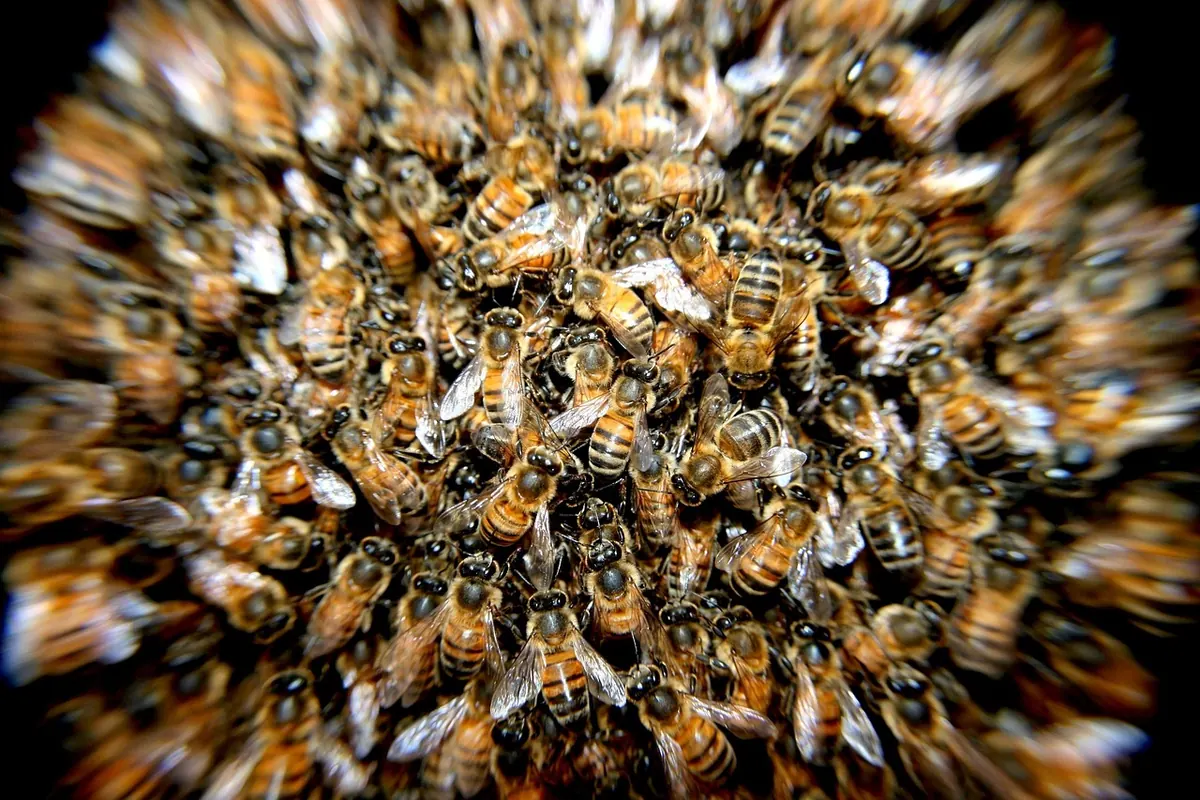
A lawn with white clover in it is already doing more for pollinators than a neatly striped green carpet ever will. Bees find it quickly, and those small pink-tinged flower heads keep producing nectar right through the summer. But clover alone gives you a fairly narrow window of interest. Add a few native wildflowers that bloom before it, beside it and after it, and the same patch of grass becomes a season-long larder for bumblebees, solitary bees, hoverflies and butterflies.
The key is choosing plants that want the same conditions clover does: sun for at least part of the day, soil that isn't fed or sprayed, and a mower that doesn't come out too often. Get that balance right and the patch looks after itself, year after year.
White clover (Trifolium repens) crops up in lawns because it tolerates close cutting and poor soil. Its flowers open from roughly late spring into early autumn, and because it's a legume it works with soil bacteria to fix nitrogen, which keeps the grass around it healthy without fertiliser. Red clover (T. pratense) is taller and needs grass left long, but it's one of the best plants you can grow for long-tongued bumblebees.
What clover doesn't do is flower early enough for the first queen bumblebees emerging in March, or late enough for butterflies stocking up before winter. Bridging those gaps is where native wildflowers earn their place.
Early queens are hungry and there is very little about. Anything flowering in March and April is worth its space.
Violets are worth adding too, not for nectar but for their leaves: several fritillary butterflies will only lay eggs on them.
This is the crossover point, when clover is coming into flower and the meadow plants are waking up. These all grow well in the same low-fertility grass:
By July the clover is at its peak and butterflies are on the wing. Knapweed is the single best addition you can make here — greater knapweed for bees and butterflies, common knapweed for a slightly tougher, shorter plant. Field scabious, with its pale lilac pincushions, is another favourite of meadow browns and gatekeepers. Wild marjoram brings in small tortoiseshells and peacocks, and betony gives a late-summer purple haze that bumblebees seem unable to resist.
If you have room for one more, add meadow cranesbill. Its blue flowers sit well among clover and it carries on for weeks.
Autumn is when pollinators are fattening up for winter, or building reserves for hibernation, and flowers are scarce. Devil's-bit scabious is the star here, flowering into September and October. Autumn hawkbit is a low, dandelion-like plant that fits neatly into a shorter lawn and keeps flowering after the mower has been over it. A late flush of red clover helps too.
And if there's ivy on a wall or fence, leave it alone until it has finished flowering. Its green autumn flowers are one of the biggest nectar sources available to bees and butterflies in the UK, right when little else is open.
Nectar gets all the attention, but butterflies only appear if their caterpillars have something to eat. That means tolerating a little roughness. A patch of nettles in a sunny corner supports peacock, small tortoiseshell and red admiral. Long grass left uncut over winter shelters the caterpillars of meadow browns, ringlets and skippers. Bird's-foot trefoil looks after the common blue. You don't need all of it — one messy corner is enough.
Think of the patch as two zones: a short, tidy edge for clover and selfheal, and a longer strip behind it for knapweed, scabious and grasses. Mow paths through it if you like. The plants don't mind.
Start small. A two-metre strip along a fence or the back of a border is plenty for a first year, and it's far easier to look after than half a lawn.
Expect a slow start. Most of these plants settle in their second year and hit their stride in the third, especially the perennials. In the meantime, the clover will cover for them — and once the mix is established, you'll have flowers from March to October with very little input beyond a bit of well-timed mowing.
Photo: PatoSan / Pixabay
How clover, thyme and chamomile compare as low-water lawn substitutes for sunny UK gardens, with practical advice on...
A month-by-month plan for turning an ordinary lawn into a year-round larder for bees, butterflies and moths, from...
A practical guide to reliable shade-tolerant plants for north-facing and wooded UK gardens, with planting advice and...

Your hub for clover, lawns, and garden inspiration..
