By the end of August, most British lawns have taken a beating. Drought, close cuts, barbecues, football and the dog's favourite route across the grass all leave their mark, and the first autumn rains often sit on the surface rather than draining away. The good news is that early to mid autumn is the best window of the year to repair it: the soil is still warm, moisture is returning, and grass is growing strongly enough to recover from a bit of rough treatment. Do the work in the right order and you will go into winter with a thicker, better-draining lawn that comes back faster in spring.
Before you hire anything or buy a bag of seed, walk the lawn and look at what you actually have. Push a screwdriver into the soil in a few places. If it slides in easily, the structure is reasonable. If you have to lean on it, you are dealing with compaction — and no amount of seed will fix that on its own.
Look at the pattern of the problems, too. Bare patches in the middle usually mean wear and tear. Thin, mossy grass under a hedge points to shade and poor air movement. Patches that stay soggy for days after rain suggest drainage. None of that is a reason to give up; it simply tells you which jobs on this list matter most this year.
Two further checks are worth two minutes of your time. First, cut a spade-sized square of turf about 5cm deep and lift it: if the roots barely reach past the thatch, your grass is living in a shallow layer and will always suffer in dry spells. Second, watch the lawn for a few mornings. If birds are pecking at it constantly, or the turf lifts like a loose carpet, you may have leatherjackets or chafer grubs feeding on the roots — a problem worth treating before you spend money on seed that will only be eaten.
Write down what you find. A lawn that is 20 per cent moss and shaded by a fence needs a different plan from a sunny lawn that is simply worn out in the middle, and doing the wrong job well is still doing the wrong job.
Thatch is the mat of dead stems, runners and old clippings that builds up between the growing grass and the soil surface. A little is useful — it cushions the crown and slows moisture loss. Too much blocks water, traps moss and leaves roots nowhere useful to go. As a rough guide, anything deeper than about 1cm — the thickness of a £1 coin — is worth removing, while a thin layer can be left alone.
Signs that it is time to scarify:
Mow the lawn shorter than usual first, to around 2–3cm, then set the scarifier shallow and work in one direction, then again at right angles. Two lighter passes are far kinder than one aggressive one that rips the lawn apart. Rake up the debris for the compost heap or green waste collection.
You can scarify a small lawn with a spring-tine rake and some effort, but anything bigger than a few square metres is far easier with a hired electric or petrol scarifier. Work when the grass is dry, and avoid scarifying if a cold snap or a long dry spell is forecast — the lawn needs a couple of weeks of gentle growing weather to knit back together.
Treat moss before you scarify, not after. Apply a moss control product according to the label, then wait for the moss to blacken and die — usually a week or two — before raking or scarifying it out. Choose a calm, dry day, keep children and pets off the grass until it has been watered in or rain has fallen, and never mix more product than you need.
Be realistic about what this achieves. Killing moss removes the symptom, but the moss will return unless you also change the conditions it loves: shade, damp, compacted soil and short, thin grass. That means aerating, improving light by trimming back overhanging branches, and overseeding to crowd it out. If your lawn is more than half moss, it is often quicker and cheaper to kill it off completely and start again with fresh seed or turf than to fight it for three seasons.
Moss is not a lawn problem on its own — it is a lawn telling you that the soil underneath is too wet, too compacted or too dark for grass to win.
If the screwdriver test was a struggle, aeration matters more this autumn than seeding does. Compaction is the invisible problem behind a lot of thin, mossy, drought-prone lawns: traffic and rain squeeze the air out of the soil, roots stop growing, and water sits on top instead of draining through.
There are two main approaches, and they do different jobs:
Time the job so the soil is moist but not waterlogged. Leave the little cores on the surface for a day or two to dry, then break them up with a rake or brush them back into the lawn. If you are overseeding, this is also the moment to top dress: scatter a thin layer of loam or sandy top dressing over the surface and work it in so it fills the holes and levels any dips.
If the soil is too dry to push a fork in, it is too dry to aerate properly; if it is wet enough to stick to your boots in clumps, it is too wet.
Overseeding is the cheapest way to thicken a tired lawn. Thick grass is the best weed and moss control there is, because there is simply no bare ground left for either to colonise.
Choose a seed mix to suit your conditions rather than grabbing whatever is on offer. A general-purpose UK mix of perennial ryegrass, creeping red fescue and browntop bent suits most sunny family lawns, while a fescue- and bent-heavy mix is the better bet for shade, dry soil or a lawn you want to cut less often. On clay that stays wet, look for a mix with more ryegrass, which tolerates heavy ground better.
Overseeding rates are roughly 15–25g per square metre across the whole lawn, rising to 35g per square metre for bare patches.
Timing is everything. Seed needs soil temperatures of around 8–10°C and four to six weeks of growing weather before the first hard frost. In the south of England that usually means sowing by mid-October; further north, aim for the end of September.
Once the new grass is up and growing, give the lawn an autumn feed — low in nitrogen, higher in phosphate and potassium — to push root growth rather than leafy top growth. A high-nitrogen spring or summer feed used now produces soft, sappy growth that frost damages and disease loves.
If you need to deal with broad-leaved weeds such as dandelions and clover, use a selective lawn weedkiller while the weeds are actively growing and the grass is not stressed by drought or frost. Read the label carefully: most weedkillers need several weeks between application and sowing new seed, and some cannot be used at all on a newly sown lawn. Never use a combined weed-and-feed product as a shortcut before overseeding.
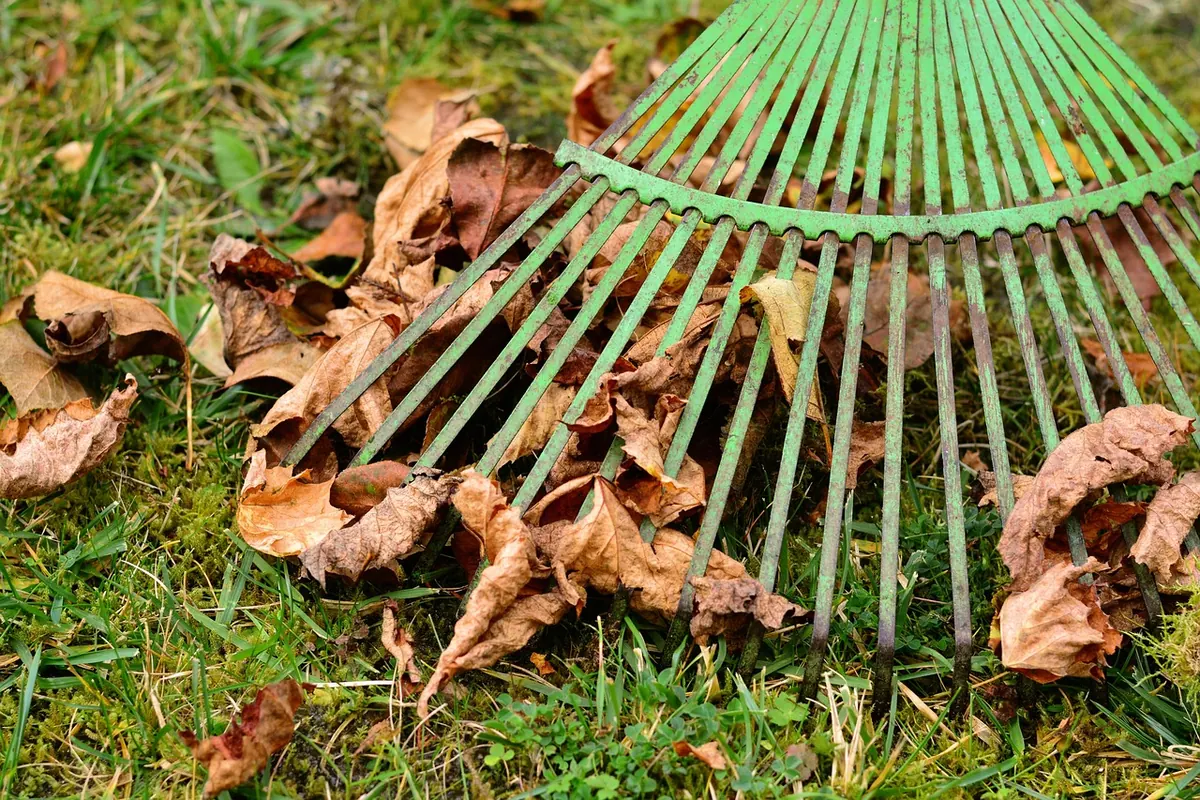
Fallen leaves are the quiet killer of autumn lawns. Left in place, they smother the grass, block light and trap damp, leaving yellow patches and encouraging fungal disease. Rake them up every few days, or run the mower over them with the box on to shred and collect them for compost.
Finally, adjust your mowing. Raise the cutting height gradually to around 4–5cm as growth slows, and keep the blade sharp so it cuts rather than tears. For the last cut of the season, leave the grass slightly longer than in summer so frost does not flatten it — but not so long that it lies wet and matted through winter. Never mow a frosty lawn, and stay off the grass when it is frozen, because footprints in frosted turf can leave brown marks that last until spring.
Order matters as much as timing. Mow, deal with moss, scarify, aerate, top dress, overseed, then feed — and leave the lawn alone long enough afterwards for it to recover.
Don't expect a bowling green by Bonfire Night. Germination takes one to three weeks depending on temperature, and newly sown grass will look patchy and uneven before it fills in. Bare patches should start to blur at the edges by mid-November, and the real improvement usually shows the following April and May, when the new plants tiller out and thicken.
What you should notice this year is ground that drains better, a lawn that no longer feels like a sponge underfoot, and far less moss when spring arrives. That is a fair return on one focused weekend's work — and by next autumn, the job will be quicker and gentler. Once the soil, the grass and the drainage are in good order, autumn lawn care becomes maintenance rather than repair.
Photo: congerdesign / Pixabay

How clover, thyme and chamomile compare as low-water lawn substitutes for sunny UK gardens, with practical advice on...

A month-by-month plan for turning an ordinary lawn into a year-round larder for bees, butterflies and moths, from...
A practical guide to reliable shade-tolerant plants for north-facing and wooded UK gardens, with planting advice and...

Your hub for clover, lawns, and garden inspiration..
